Choosing the right luxury yacht depends primarily on how and where it will be used. Key factors include cruising destinations, hull type, draft, construction material, range, propulsion, crew requirements, onboard space, operating costs, and whether to choose a new build or brokerage yacht. Evaluating these factors together helps buyers select a yacht that matches their cruising lifestyle, comfort expectations, and long-term ownership needs.
Buying a Yacht Isn't About Size - It's About the Life You Want to Live
Ask someone why they bought a yacht, and the answer is rarely "because it was 88 feet."
They'll talk about waking to a quiet sunrise in a secluded bay. Watching their children dive into impossibly clear water before breakfast. Cruising slowly through the Greek Islands without a schedule. Anchoring off a deserted Bahamian sandbar where the nearest footprints are their own.
The yacht itself becomes part of the story - but it is never the whole story.
This is perhaps the most important lesson first-time buyers learn. Choosing the right yacht is not about finding the biggest vessel within a budget. Nor is it about selecting the model with the highest top speed or the largest owner's suite. The most successful yacht purchases begin with a different question altogether:
How do you want to experience the sea?
A specification sheet tells you what a yacht can do. Your lifestyle determines what it will actually do.
An owner planning to spend summers exploring the shallow waters of the Bahamas will likely have very different priorities from someone intending to cruise the Norwegian fjords or cross the Atlantic to the Caribbean. A couple seeking quiet weekends aboard will value different features than a family hosting three generations every holiday. Likewise, an entrepreneur looking for a private floating office may judge a yacht by entirely different standards than an owner focused on entertaining clients.
The yacht market has never offered more choice. Luxury power catamarans, expedition yachts, flybridge motor yachts, explorer vessels, and custom superyachts each represent a distinct philosophy of cruising rather than simply a different style of boat.
That diversity is exciting, but it also makes the buying process more complex.
The most experienced brokers rarely begin by discussing length overall or horsepower. Instead, they spend time understanding how their clients intend to use the yacht, where they hope to cruise, how often they expect to travel, and what kind of experiences they value most.
Only then does the conversation turn to specifications.
This guide takes the same approach. Rather than comparing yachts solely by size or price, it explores the practical and personal questions that define long-term satisfaction. From cruising grounds and hull design to ownership style and future flexibility, these are the considerations that often matter far more than headline numbers.
Because in luxury yachting, the best yacht is rarely the largest one.
It is the one that perfectly fits the life you want to live.
Start With Your Cruising Lifestyle, Not the Specification Sheet
Specification sheets are fascinating.
Length. Beam. Draft. Fuel capacity. Engine output. Range.
For experienced buyers, these numbers provide valuable insight into a yacht's capabilities.
For first-time buyers, however, they can become a distraction.
Many people begin comparing yachts before they have clearly defined how they intend to use them. The result is often a vessel that performs brilliantly on paper but feels less suited to real life.
Instead of beginning with technical specifications, begin with a much simpler exercise.
Imagine your ideal year on the water.
Where are you?
Who is with you?
How long are your trips?
How often do you move?
How much privacy do you value?
Most first-time buyers spend weeks comparing horsepower, speed, and length. Experienced owners are more likely to compare anchorages, passage times, draft, storage, and the number of days they can comfortably remain away from a marina.
The Coastal Explorer
Some owners rarely venture far from shore.
Their perfect weekend might involve leaving the marina on Friday afternoon, anchoring in a protected bay, enjoying dinner onboard, and returning home Sunday evening.
These owners often prioritize:
- Easy handling
- Comfortable outdoor spaces
- Efficient weekend cruising
- Marina accessibility
- Low operating complexity
Long ocean-crossing capability may be largely irrelevant.
Instead, comfort at anchor and simplicity of ownership become far more important.
The Island Hopper
Others dream of spending weeks exploring island chains.
The Mediterranean.
The Caribbean.
French Polynesia.
The Maldives.
For these owners, flexibility becomes essential.
Questions begin to change.
Can the yacht comfortably remain at anchor for several days?
Is the draft suitable for shallow bays?
Can it access hidden lagoons?
Does it offer enough storage for extended cruising?
A yacht capable of comfortably moving between islands without relying on marina infrastructure opens an entirely different style of travel.
The World Cruiser
Some buyers think much bigger.
Their ambition is not simply to own a yacht, but to circumnavigate continents over several years.
These owners prioritize:
- Long range
- Fuel efficiency
- Redundant systems
- Crew comfort
- Weather capability
- Storage capacity
- Reliability
For them, every engineering decision contributes to independence.
The Floating Family Home
Increasingly, luxury yachts are becoming places where families spend meaningful time together rather than simply taking holidays.
Children learn to snorkel.
Grandparents enjoy slow mornings on deck.
Friends gather for sunset dinners.
The yacht becomes less like a hotel and more like a private residence that happens to float.
These owners often prioritize:
- Large social spaces
- Stability at anchor
- Multiple guest cabins
- Swim platforms
- Easy water access
- Safe movement onboard
The emphasis shifts from speed to quality of life.
The Entertainer
For some owners, the yacht is an extension of their business and personal network.
It becomes a venue for:
- Client meetings
- Celebrations
- Corporate retreats
- Private events
- Family occasions
Layout suddenly becomes more important than length.
Well-designed entertaining areas often create a greater impression than an additional ten feet of hull.
Why Cruising Destinations Should Shape Your Yacht Choice
One of the biggest mistakes prospective owners make is assuming that every luxury yacht can comfortably explore the same destinations.
They cannot.
Different cruising grounds reward different designs.
The same yacht can feel perfectly suited to one cruising ground and unnecessarily compromised in another. A feature that looks minor on a specification sheet can determine whether you enter an anchorage - or watch it from outside.
The Bahamas
The Bahamas is one of the world's finest cruising destinations, but it also illustrates why yacht selection matters.
Much of the archipelago is defined by:
- Sandbanks
- Shallow channels
- Coral heads
- Turquoise lagoons
- Tidal flats
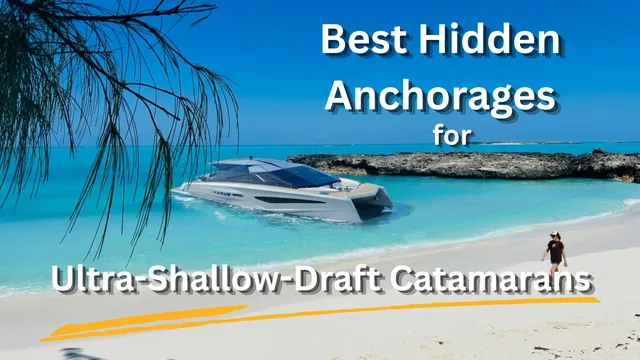
Many anchorages that define the Bahamian experience reward yachts with reduced draft.
Rather than remaining offshore, shallower vessels can often approach beaches more closely and access protected anchorages tucked behind sandbars.
For owners planning to spend significant time here, draft deserves as much attention as length.
The Mediterranean
The Mediterranean presents an entirely different environment.
Cruising typically revolves around:
- Historic ports
- Coastal villages
- Marina culture
- Fine dining
- Shorter cruising distances
Here, draft is generally less restrictive than in the Caribbean, while guest accommodation, entertaining areas, and marina maneuverability become increasingly important.
Owners often spend evenings ashore before returning to the yacht rather than remaining anchored in remote locations.
Northern Europe
Cruising Norway, Scotland, or Iceland introduces another set of priorities.
Weather changes rapidly.
Distances between fuel stops may be greater.
Sea conditions become more demanding.
Owners often place greater emphasis on:
- Robust engineering
- Stability
- Weather protection
- Long-range capability
The yacht effectively becomes an expedition platform rather than simply a floating villa.
The South Pacific
French Polynesia, Fiji, and other South Pacific destinations reward yachts capable of operating independently for extended periods.
Many islands have limited marina infrastructure.
Anchorages may be remote.
Fuel availability can be less predictable.
Owners planning these voyages often prioritize:
- Autonomy
- Water production
- Efficient fuel consumption
- Comfortable long passages
The ability to remain self-sufficient becomes part of the adventure.
Bigger Isn't Always Better
Luxury real estate often rewards size.
Yachts are different.
A larger yacht brings undeniable advantages:
- More interior volume
- Additional guest cabins
- Expanded crew accommodation
- Greater storage
- Larger entertainment areas
But it also introduces greater complexity.
Operating costs increase.
Crew requirements expand.
Maintenance becomes more involved.
Marina options become more limited.
Some destinations become less accessible simply because of size.
Experienced owners often describe an ideal yacht not as the largest they can afford, but as the smallest yacht that comfortably supports the lifestyle they envision.
That philosophy explains why many buyers moving into the luxury segment today are placing greater emphasis on intelligent design rather than maximum dimensions.
Every additional metre should solve a problem. If it only adds space you rarely use while increasing crew, berthing, maintenance, and operating requirements, it may not improve the ownership experience at all.
Modern naval architecture has shown that thoughtful layouts, advanced materials, and efficient hull forms can create remarkable living space without continuously increasing overall length.
This shift is particularly evident in the growing popularity of luxury power catamarans, where beam, stability, and efficient use of space often provide a very different ownership experience from a traditional monohull of similar length.
Monohull or Power Catamaran? Understanding Two Different Philosophies of Cruising
One of the first major decisions a buyer faces has little to do with interior finishes or engine choices.
It begins with the hull.
For decades, the luxury yacht market was dominated by monohulls. Elegant, fast, and instantly recognizable, they became the standard against which nearly every motor yacht was measured.
Today, however, power catamarans are reshaping expectations. Once associated primarily with charter fleets and commercial vessels, modern luxury catamarans have evolved into sophisticated cruising platforms that offer a distinctly different ownership experience.
Importantly, neither design is inherently better.
Each reflects a different philosophy of life at sea.
The right choice depends not on tradition, but on how you intend to cruise.
The Character of a Monohull
A well-designed monohull offers an unmistakable sense of refinement underway.
Its single hull slices through the water with confidence, delivering a driving experience many owners find deeply engaging. At higher speeds and in open water, monohulls often provide dynamic handling that appeals to experienced captains.
For owners who enjoy moving frequently between marinas, entertaining in iconic ports such as Monaco, Porto Cervo, or Saint-Tropez, and appreciate the heritage of classic yacht design, a monohull remains an exceptional choice.
Many of the world's most celebrated superyachts continue to follow this design philosophy for good reason.
Advantages typically include:
- Elegant proportions.
- Strong performance in open water.
- Extensive model availability.
- Well-established resale market.
- Familiarity for crews and service providers.
Yet every design represents a series of compromises.
The Modern Power Catamaran
A luxury power catamaran approaches cruising from an entirely different perspective.
Rather than emphasizing speed alone, it prioritizes space, efficiency, stability, and accessibility.
Instead of one wider hull, two slender hulls move through the water with reduced resistance. The result is a platform that naturally lends itself to long, comfortable passages and extended stays at anchor.
Owners frequently describe the experience not as boating, but as living on the water.
Large panoramic windows, expansive outdoor terraces, broad beam, and remarkable stability create an atmosphere that feels closer to a contemporary waterfront residence than a traditional yacht.
This is one reason power catamarans have become increasingly popular among owners planning to spend weeks or months aboard rather than simply enjoying weekend escapes.
Stability: Comfort You Feel Every Day
Luxury is often measured in subtle ways.
One of those is motion.
Every yacht moves. The question is how that movement affects life onboard.
Power catamarans benefit from a naturally wide stance, which generally reduces rolling while at anchor and during moderate sea conditions.
For guests unfamiliar with boating, this often translates into:
- More comfortable dining.
- Better sleep.
- Easier movement around the yacht.
- Greater confidence for children and older family members.
- Reduced fatigue during longer passages.
It is important to recognise that no yacht is completely immune to the sea.
Sea state, hull design, stabilisation technology, and captaincy all play significant roles.
Nevertheless, many owners who spend extended periods at anchor appreciate the calm, predictable platform that a modern catamaran provides.
Why Draft May Matter More Than Length
Prospective buyers often focus on overall length because it is one of the easiest specifications to compare.
Yet one of the measurements that can have the greatest influence on where a yacht can actually go is draft.
Draft determines how much water a yacht requires beneath its hull to operate safely. On paper, the difference between a draft of one meter and two meters may appear modest. In practice, it can completely change the cruising experience.
It influences:
- Access to shallow bays and lagoons.
- Anchorage options.
- Marina accessibility.
- Route planning.
- Navigation in tidal waters.
- How closely the yacht can approach beaches and sheltered coastlines.
Two yachts may offer similar range, accommodation, and speed, yet a difference of less than a meter in draft can significantly change the destinations available to their owners.
Access Creates Opportunity
Across some of the world's finest cruising grounds, many of the most memorable anchorages are also among the shallowest.
The Exumas, Tobago Cays, Florida Keys, Belize, the Maldives, and parts of French Polynesia all contain cruising areas where reduced draft can provide a meaningful advantage.
Rather than remaining farther offshore, shallower vessels may be able to approach beaches more closely, enter protected lagoons, and explore anchorages that are inaccessible to deeper yachts.
This can also influence comfort. Access to a protected shallow anchorage may offer better shelter from swell than remaining farther offshore.
For owners planning to spend significant time exploring islands and remote coastlines, draft therefore deserves just as much consideration as length, range, or maximum speed.
It is not simply an engineering measurement.
It is a measure of access - and, in many cruising grounds, a measure of freedom.
Materials Matter More Than Most Buyers Realise
Walk through a yacht show, and it is easy to become captivated by handcrafted interiors, polished stone, and beautifully detailed joinery.
Far less attention is given to what lies beneath those finishes.
Yet the materials used to build a yacht influence nearly every aspect of ownership.
Performance.
Fuel efficiency.
Maintenance.
Comfort.
Longevity.
Even resale value.
The owner may never see most of the yacht's structure after delivery, but they will experience its consequences every day - in displacement, noise, vibration, fuel consumption, structural stiffness, maintenance and ultimately how the yacht feels underway.
Fiberglass: The Industry Standard
Fiberglass has formed the backbone of recreational yacht construction for decades.
It is durable, versatile, and comparatively economical to manufacture.
Properly maintained, fiberglass yachts can provide decades of reliable service.
For many owners, it remains an excellent choice.
Aluminum: Strength and Customisation
Aluminum occupies a different space within the market.
Favoured for explorer yachts and many custom builds, it offers exceptional structural strength while remaining lighter than steel.
It also allows builders considerable flexibility when creating one-off designs.
Owners planning remote expeditions or extensive customisation often gravitate toward aluminum platforms.
Carbon Fiber: Engineering for Efficiency
Carbon fiber represents a more recent evolution in luxury yacht construction.
Rather than simply reducing weight, it enables designers to rethink how a yacht performs as a complete system.
Because carbon fiber offers remarkable strength relative to its weight, naval architects can create lighter structures without compromising the structural stiffness.
The practical benefits often can include:
- Lower overall displacement.
- Improved fuel efficiency.
- Faster acceleration.
- Reduced vibration.
- Greater structural stiffness.
- Enhanced cruising comfort.
Importantly, these advantages compound.
A lighter yacht may require less engine power.
Smaller engines can consume less fuel.
Reduced fuel loads further decrease weight.
The result is an engineering philosophy centred on efficiency rather than brute force.
This is why lightweight construction should not be viewed as a single specification. Done properly, it influences the entire engineering chain of the yacht.
Understanding Range Beyond the Brochure
One of the most common misconceptions in yacht buying is that range is determined by fuel tank size.
In reality, fuel capacity tells only part of the story.
Imagine two yachts carrying exactly the same amount of fuel.
One is significantly heavier.
The other has been engineered using lightweight materials and efficient hull geometry.
Although both depart with identical fuel reserves, they may arrive with very different amounts remaining.
True cruising range depends upon an intricate relationship between:
- Hull efficiency.
- Displacement.
- Cruising speed.
- Weather.
- Payload.
- Engine technology.
- Energy management.
This is why experienced owners rarely ask only one question:
"How far can it go?"
Instead, they ask:
"How efficiently can it take me there?"
That distinction often separates yachts designed for occasional holidays from those intended for serious exploration.
Why Propulsion Is About More Than Speed
Propulsion systems are often discussed in terms of horsepower and maximum speed.
Yet for long-term owners, the more important considerations are efficiency, reliability, comfort, manoeuvrability, and how well the propulsion system suits the yacht's intended use.
Different propulsion solutions offer different advantages. Conventional shaft drives, outboards, pod systems, waterjets, and hybrid configurations can each be appropriate depending on the yacht's design, size, cruising profile, and performance requirements.
For a buyer, the important question is therefore not simply how much power the yacht has, but how effectively that power is used.
A well-matched propulsion system can contribute to:
- Efficient cruising and extended range.
- Precise low-speed manoeuvrability.
- Reduced noise and vibration.
- Reliable operation over long distances.
- Easier maintenance and servicing.
- Better integration with the yacht's overall design and intended cruising grounds.
There is no propulsion system that is universally superior. The right solution depends on where the yacht will operate, the speeds at which it will spend most of its time, and what the owner expects from it.
For some owners, maximum range and efficiency will be the priority. For others, shallow-water capability, manoeuvrability, performance, or quiet operation may matter more.
Propulsion is therefore much more than an engine specification.
It is part of the overall engineering philosophy that determines how the yacht performs, where it can go, and ultimately how it feels to own and use.
Crew or Owner-Operated? Understanding the Human Side of Ownership
Perhaps no decision influences the ownership experience more than the people who operate the yacht.
Some owners enjoy taking the helm themselves. They value the satisfaction of navigation, passage planning, and seamanship.
Others prefer to step aboard with family and guests knowing every detail has already been arranged.
Neither approach is right or wrong. It depends entirely on expectations.
Smaller yachts are often perfectly suited to experienced owner-operators, while larger luxury yachts increasingly benefit from professional captains, engineers, and hospitality staff who ensure every journey runs smoothly. Depending on a yacht's size, gross tonnage, flag and intended use, different registration, certification and manning requirements may also apply.
Crew requirements also influence the yacht's design. Crew accommodation, service routes, storage, laundry, galley capacity and technical access all require space, meaning the intended operating model should be considered from the beginning of the design process.
The transition from owner-operated cruising to professionally managed ownership is less about prestige than practicality.
As yachts become more sophisticated, so do the systems that support them.
Professional crews allow owners to spend less time managing logistics and more time enjoying the experiences that inspired the purchase in the first place.
New Build or Brokerage? Choosing the Right Path to Ownership
Once buyers have a clear understanding of how they intend to cruise, another important decision emerges.
Should you commission a new yacht or purchase one that already exists?
There is no universal answer. Both approaches offer distinct advantages, and the right choice depends on your priorities, timeline, and expectations.
The Appeal of a New Build
For many owners, commissioning a yacht is an opportunity to create something deeply personal.
From interior finishes and cabin layouts to entertainment systems and technical specifications, every decision reflects the owner's vision.
Beyond customization, new yachts also benefit from modern engineering, current safety standards, and the latest developments in propulsion, energy management, and onboard technology.
Other advantages include:
- Manufacturer warranties.
- Minimal initial maintenance.
- Contemporary design language.
- Latest navigation and communication systems.
- Greater energy efficiency.
- Potentially stronger long-term resale appeal if well specified.
The process requires patience. Depending on complexity, construction may take anywhere from eighteen months to several years.
For buyers who enjoy the creative journey as much as the finished yacht, the experience itself can be deeply rewarding.
The greatest advantage of a new build is not simply choosing colours and finishes. It is the opportunity to design the yacht around how you intend to use it before structural, technical and spatial decisions become fixed.
The Advantages of a Brokerage Yacht
Buying an existing yacht offers a different set of benefits.
The most obvious is immediate availability.
Rather than waiting years, owners can often begin cruising within weeks of completing surveys and legal formalities.
Brokerage yachts may also provide exceptional value.
A well-maintained yacht that has already absorbed much of its initial depreciation can represent a compelling opportunity, particularly when accompanied by comprehensive maintenance records and professional management history.
However, buyers should approach brokerage purchases with careful due diligence.
A detailed pre-purchase survey, review of maintenance documentation, and evaluation of machinery, electronics, and structural condition are essential.
An attractive asking price can quickly lose its appeal if significant refit work becomes necessary shortly after purchase.
The Ten Mistakes First-Time Yacht Buyers Often Make
Buying a luxury yacht is unlike purchasing almost any other asset.
Experience matters.
Many owners later admit that the lessons they value most were learned only after spending time aboard.
Understanding these common mistakes before purchasing can help avoid costly compromises.
1. Choosing Size Before Lifestyle
Bigger yachts offer more space, but they also introduce greater complexity, operating costs, and crew requirements.
The best yacht is not the largest one you can afford.
It is the one you will use most often.
2. Underestimating Operating Costs
Purchase price represents only the beginning of ownership.
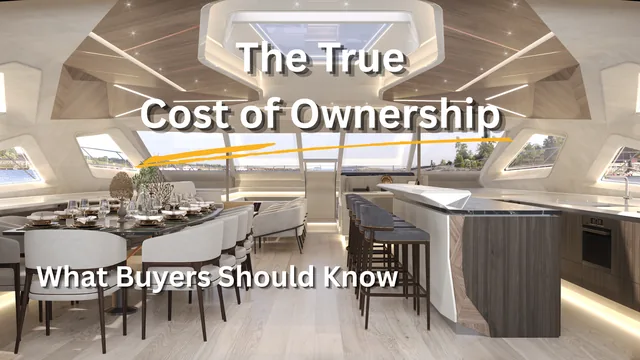
Fuel, insurance, dockage, maintenance, crew, technical servicing, and periodic refits all contribute to the total cost of ownership.
Successful buyers budget for the complete ownership journey rather than focusing solely on acquisition.
3. Ignoring Draft
Many buyers compare length and horsepower while overlooking one of the most important specifications on the page.
Draft determines access.
A yacht capable of entering shallow lagoons, protected bays, and secluded anchorages offers experiences that specifications alone cannot quantify.
4. Buying for Today Instead of Tomorrow
A yacht purchased for occasional weekends may eventually become the centrepiece of extended family holidays or long-distance cruising.
Thinking five or ten years ahead often leads to better decisions than buying solely for current needs.
5. Falling in Love with the Interior Alone
Beautiful interiors attract attention at boat shows.
Great engineering reveals itself over years of ownership.
Construction quality, structural integrity, system redundancy, and engineering access deserve just as much attention as handcrafted cabinetry.
6. Underestimating the Importance of Crew
Even the finest yacht becomes less enjoyable without the right people onboard.
Professional crews contribute not only to safety but also to hospitality, maintenance, and the overall ownership experience.
Investing in experienced crew is often one of the most valuable decisions an owner can make.
7. Focusing Too Much on Maximum Speed
Top speed makes headlines.
Cruising comfort creates memories.
Most owners spend the vast majority of their time operating well below maximum speed, where efficiency, comfort, and stability become far more important.
8. Not Thinking About Resale
Every yacht eventually changes hands.
Builder reputation, maintenance history, thoughtful specifications, and timeless design all influence long-term value.
Purchasing with resale in mind often leads to better ownership decisions from the beginning.
9. Skipping Professional Advice
Yacht brokers, surveyors, naval architects, maritime lawyers, insurance specialists, and experienced captains each provide valuable expertise.
Surrounding yourself with knowledgeable professionals helps reduce risk and improve decision-making.
10. Buying Emotionally Without a Long-Term Plan
Luxury yachts inspire emotion.
They should.
But the most successful purchases balance passion with careful planning.
Emotion may begin the journey.
Good decisions sustain it.
Future-Proofing Your Yacht
The luxury yacht industry is evolving rapidly.
Materials, propulsion systems, onboard technology, and owner expectations continue to change.
While no one can predict the future with certainty, buyers can look for characteristics that are likely to remain valuable over the coming decades.
These include:
- Efficient hull design.
- Advanced composite construction.
- Flexible interior layouts.
- Hybrid-ready engineering where appropriate.
- Energy-efficient onboard systems.
- High-quality documentation and maintenance records.
- Timeless rather than trend-driven styling.
Classification rules are also evolving alongside new energy and propulsion technologies, with new notations increasingly addressing areas such as battery readiness and shore-power integration.
Future-proofing is not about chasing every new technology.
It is about choosing a yacht built around enduring principles of quality, efficiency, and adaptability.
A Practical Framework for Choosing the Right Yacht
Rather than comparing yachts one specification at a time, experienced buyers often evaluate them through a series of practical questions.
Where will I spend most of my time cruising?
The answer influences draft, range, and hull design more than almost any other factor.
How many people will regularly be onboard?
Think beyond maximum guest capacity.
Consider how the yacht feels with the number of people you expect to host most often.
Comfort is shaped by space per guest, not simply the number of cabins.
How independent do I want to be?
Some owners enjoy moving between marinas every evening.
Others prefer spending weeks at anchor in remote locations.
Your answer will determine the importance of autonomy, water production, storage, fuel capacity, and energy management.
Do I enjoy operating the yacht myself?
Some buyers dream of taking the helm.
Others value stepping aboard while an experienced crew manages every detail.
Understanding your preferred level of involvement will influence yacht size, complexity, and operating model.
What kind of experiences matter most?
Imagine your ideal day onboard.
Is it entertaining guests in Monaco? Anchoring beside an untouched beach? Cruising through Norwegian fjords? Exploring coral lagoons in French Polynesia?
The experiences you value most should guide every technical decision.
A Buyer's Checklist
Before making any purchase decision, ask yourself:
✓ Have I clearly defined where I want to cruise?
✓ Does the yacht suit my lifestyle rather than my ego?
✓ Have I considered total ownership costs?
✓ Is the draft appropriate for my preferred destinations?
✓ Does the construction material align with my priorities?
✓ Will the yacht remain suitable five years from now?
✓ Have I reviewed maintenance history or build quality?
✓ Have I spoken with experienced captains or surveyors?
✓ Does the yacht feel comfortable rather than simply impressive?
✓ Would I still choose this yacht after comparing it with several alternatives?
The answers often reveal more than any brochure.
Choosing the Yacht That Fits Your Life
Luxury yacht ownership has never been defined solely by size.
The most memorable journeys are rarely shaped by an extra five metres of length or a few additional knots of speed.
They are shaped by experiences.
A quiet morning in an empty anchorage.
Dinner beneath the stars with family.
Children discovering marine life in crystal-clear water.
The freedom to change course simply because a secluded bay appears on the horizon.
The finest yachts support those moments effortlessly.
For some owners, that means an elegant monohull designed for Mediterranean cruising.
For others, it may be an expedition yacht built for crossing oceans.
Increasingly, it also means a new generation of luxury power catamarans that combine exceptional living space, shallow-water capability, efficiency, and long-range comfort in ways that were difficult to imagine only a decade ago.
The best yacht is never chosen because it has the longest specification sheet.
It is chosen because it enables the life its owner has imagined long before stepping aboard.
When lifestyle leads the decision - and engineering, craftsmanship, and capability follow - the result is more than a successful purchase.
It is the beginning of a lifetime of extraordinary journeys.
Questions to Ask Before Choosing a Yacht
Your intended cruising lifestyle should always come first. Where you plan to cruise, how often you'll use the yacht, and who will be onboard will influence every major decision, from hull design to propulsion and accommodation.
Not necessarily. Larger yachts provide more space but also bring higher operating costs, increased maintenance, larger crews, and greater complexity. The ideal yacht is the one that best matches your lifestyle.
Monohulls often appeal to owners who enjoy traditional handling and marina-based cruising, while power catamarans generally offer greater stability, more living space, improved efficiency, and shallower draft for exploring remote destinations.
Draft determines how much water a yacht needs beneath its hull. A shallower draft allows access to lagoons, sandbars, secluded bays, and anchorages that may be inaccessible to deeper vessels.
Carbon fiber is increasingly becoming an important material in next-generation yacht construction, particularly where low weight, structural stiffness and efficiency are priorities. When properly engineered and manufactured, carbon composites offer excellent fatigue performance, corrosion resistance and long-term structural durability. Combined with their high strength-to-weight ratio, these characteristics make carbon fiber one of the most promising materials for yachts designed around efficiency, performance and long service life.
A new build offers customization, modern engineering, and manufacturer warranties, while a brokerage yacht may provide immediate availability and strong value if it has been professionally maintained.
Owners should plan for ongoing expenses including maintenance, insurance, dockage, fuel, crew, technical servicing, and periodic upgrades. Evaluating total cost of ownership is essential before making a purchase.
The right range depends on your cruising plans. Coastal cruising, Mediterranean island hopping, and transoceanic passages all require different levels of autonomy and fuel capacity.
Many smaller yachts can be owner-operated with the appropriate experience and certifications where required. Larger yachts often benefit from professional crews to manage navigation, engineering, hospitality, and maintenance.
Build quality, builder reputation, thoughtful specification, comprehensive maintenance records, efficient engineering and timeless design can all contribute to stronger resale appeal.
Interested in learning more about LANIAKEA or discussing your own custom yacht project?
Contact Us